Your Inbox Is Already a Target — Here’s What to Do About It
If you’re looking for the most safe email provider, here are the top options in 2026:
Think about what lives in your inbox right now.
Password resets. Bank statements. Medical results. Years of personal conversations.
Now think about who else might be reading it.
Switching to a safer email provider is one of the highest-impact privacy moves you can make in 2026. This guide breaks down exactly which providers protect you, how they do it, and what to look for before you sign up.
Key Criteria for the Most Safe Email Provider
When we talk about the most safe email provider, we aren’t just talking about a strong password. True security is baked into the very architecture of the service. In 2026, the “standard” has shifted from simply having a lock on the door to ensuring the provider doesn’t even have a key to the house.
To find a provider that actually respects your life, we look for several “non-negotiable” pillars:
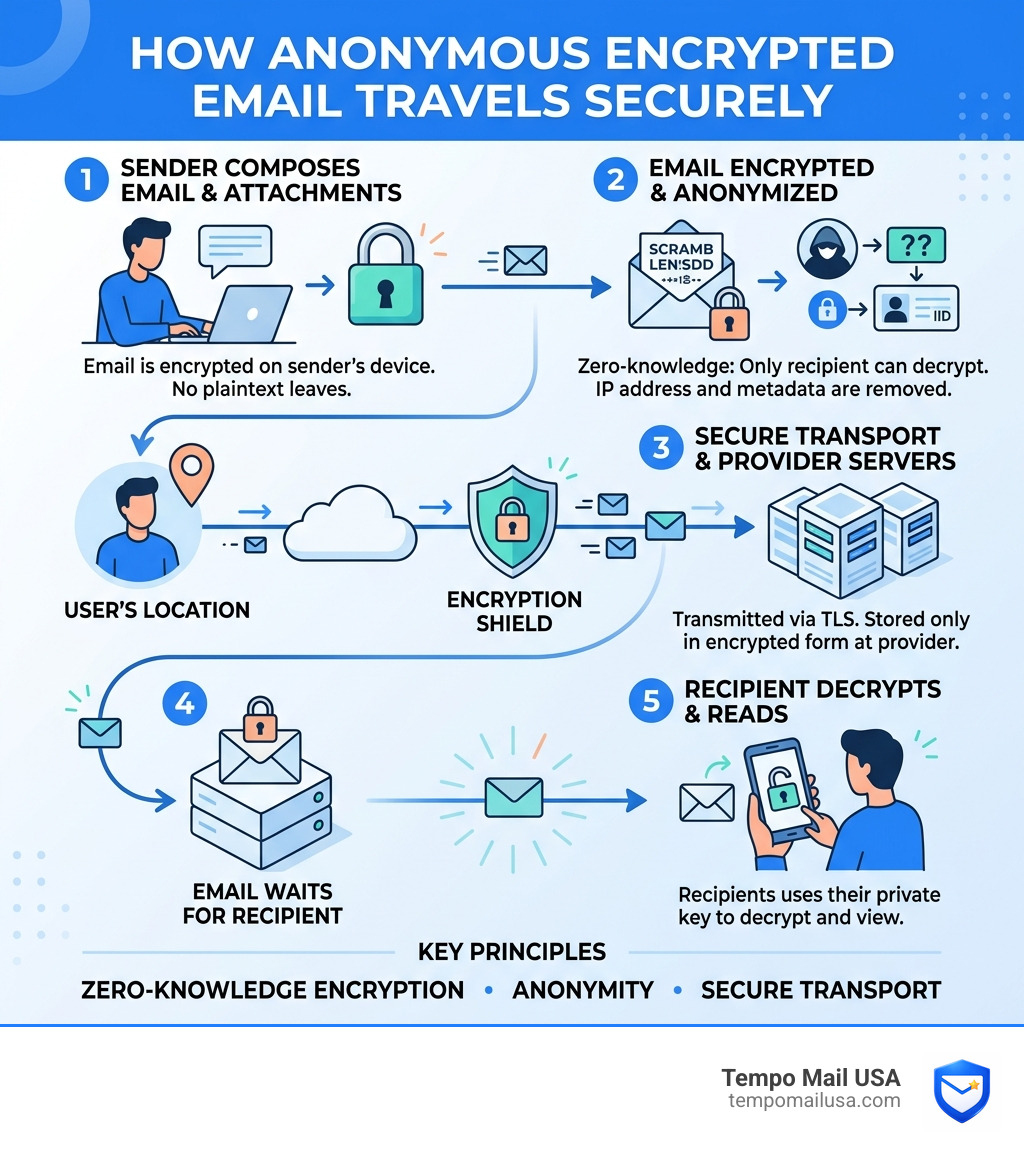
- Zero-Access Architecture: This means the provider uses your password to derive a key that encrypts your data. Because they don’t store your password, they literally cannot see your emails. If the government knocks on their door with a subpoena, the provider can only hand over a pile of scrambled code.
- End-to-End Encryption (E2EE): While zero-access protects your stored mail, E2EE ensures that a message is encrypted on your device and only decrypted on the recipient’s device.
- Open-Source Transparency: You shouldn’t have to take a company’s word for it. The most safe email provider will publish their code for the world to see. This allows independent researchers to verify that there are no “backdoors” for hackers or spies.
- Independent Security Audits: We look for companies that regularly pay third-party experts to try and break into their systems. These audit reports should be public.
Understanding the “Zero-Data” footprint is essential. Most mainstream providers want to know everything about you so they can sell you to advertisers. A secure provider aims to know as little as possible. They don’t track your IP address, they don’t scan your attachments, and they don’t ask for a phone number during signup if they can help it.
How the Most Safe Email Provider Handles Encryption
Encryption sounds like something out of a spy movie, but it’s actually the math that keeps your bank account and private jokes safe. The most safe email provider typically uses a combination of standards:
- PGP (Pretty Good Privacy): The gold standard for decades. It uses a pair of keys—a public one to encrypt and a private one to decrypt.
- AES-256: This is “military-grade” symmetric encryption used to protect the data while it sits on a server.
- Post-Quantum Cryptography: This is the new frontier for 2026. As quantum computers become more powerful, they could potentially “crack” traditional encryption. Providers like Tuta Mail are already implementing algorithms designed to survive the quantum age.
The key takeaway here is local decryption. In a truly secure setup, the “unscrambling” of your email happens on your phone or laptop, not on the provider’s server. If the decryption happens on their server, they are just “holding” the key for you—and anyone who steals that key can read your mail.
Why Jurisdiction Defines the Most Safe Email Provider
You might think the internet has no borders, but the physical location of an email server matters immensely. This is what we call jurisdiction.
Switzerland, for example, is not part of the EU or the US, meaning it isn’t subject to the same data-sharing alliances. This is why many people consider Swiss-based services to be the most safe email provider options. They operate under a “Privacy by Default” philosophy that treats your data as your property, not a corporate asset.
Evaluating Privacy-First Email Architectures
Choosing between different secure providers often comes down to how they handle your “metadata”—the information about your email (like who you messaged and when), rather than just the content.
The rise of disposable identity layers has changed the game. Instead of giving your real, “permanent” secure email to every random website, you use a proxy. This is where we see the most growth in privacy tech. By acting as a firewall between services and your real identifiable information, you ensure that even if a site is breached, your “real” inbox remains hidden.
Usability and Features of the Most Safe Email Provider
In the past, secure email was clunky. You had to exchange long strings of “keys” manually. Today, the most safe email provider feels just as smooth as Gmail.
Modern secure providers offer:
- Mobile-Optimized Security: Apps for iOS and Android that use biometric locks.
- Secure Attachment Handling: Attachments are encrypted before they even leave your device.
- Identity Proxying: The ability to create “aliases” so you don’t have to share your primary address.
- AI-Driven Threat Detection: Services like Proton Sentinel use a mix of AI and human analysts to block account takeover attempts 24/7.
Many users are surprised to find they can even Protect Your Privacy with Free Private Email Services without spending a dime, though paid tiers often unlock more storage and custom domains.
Advanced Privacy for the Most Safe Email Provider
If you want to go beyond basic encryption, look for these advanced features:
- Email Aliases: These are “forwarding” addresses. You give a unique alias to every site you use. If one site starts spamming you, you just “turn off” that alias.
- Tracker Blocking: Did you know many emails contain “spy pixels” that tell the sender exactly when and where you opened an email? Secure providers strip these out automatically.
- Anonymous Payments: Some providers allow you to pay for your subscription using Bitcoin or even cash sent in an envelope to ensure there is no financial trail leading back to your identity.
This level of control is vital for the Role of Disposable Email in Online Shopping Privacy. When you shop online, your email is often the “key” that data brokers use to link your purchases across different stores. Using aliases breaks that link.
Why Mainstream Providers Compromise Your Privacy
We all know the saying: “If the product is free, you are the product.” This is the fundamental problem with mainstream providers like Gmail and Outlook.
Furthermore, mainstream providers are often the first targets for government surveillance. Because they hold the keys to your data, they can be forced to provide access via “backdoors.” They also have a history of third-party access vulnerabilities, where apps you’ve connected to your account (like a calendar or a travel app) end up having full permission to read your private messages.
What Are the Benefits of Using Temporary Email? It allows you to interact with these mainstream ecosystems without feeding the beast your real data.
Frequently Asked Questions
Many people are hesitant to switch because they think it’s too complicated. It’s actually easier than you think. Why You Need a Secure Temp Mail Service for Privacy is a great starting point to understand how to layer your defenses.
How do I protect my primary inbox using a secure provider?
The best strategy is “Inbox Shielding.” Think of your primary secure email as your “home address”—you only give it to people you trust (like your bank or your family). For everything else—newsletters, e-commerce, social media—you use a temporary layer or an alias.
This reduces the digital footprint of your main account. If a social media site gets hacked, the hackers only get a “proxy” email, not the one you use for your sensitive bank logins. You can even check Is Tempomailusa Good for Signups to see how simple it is to get started with this layered approach.
Can I use secure email for external communications?
Yes! One of the biggest myths is that you can only send secure emails to other people using the same provider.
The most safe email provider options allow you to send “Password-Protected Emails.” You write your message, set a password, and send it. Your recipient (even if they use Gmail) gets a link. They click it, enter the password you shared with them (via a different channel like Signal), and read the message in a secure browser portal. The message can even be set to “self-destruct” after a few hours or days.
What are the benefits of free secure email layers?
Free tiers are the perfect “testing ground.” They offer:
- Spam Prevention: Use a free layer for sketchy sites.
- Identity Isolation: Keep your work and personal life separate without paying for multiple accounts.
- Avoiding Permanent Logs: Some free services don’t even require an account, meaning there is zero data log of your existence.
You can Protect Your Privacy with Free Private Email Services today to start cleaning up your digital life without any financial commitment.
Conclusion
By choosing the most safe email provider—one that uses zero-access encryption and operates out of a privacy-friendly jurisdiction—you take back control. But remember, a secure provider is only half the battle. You also need to manage how you share your information.
At Tempo Mail USA, we believe in the power of identity proxying. We act as a PII firewall, ensuring that your real identifiable information never reaches the hands of data brokers or hackers. Whether you are signing up for a new app or just trying to avoid a flood of marketing spam, Temporary Email Spam Protection a Smart Way to Stay Secure is your first line of defense.
Don’t let your inbox leak another day. Protect your identity, secure your conversations, and start using a provider that actually works for you, not against you. Visit us at https://tempomailusa.com to learn how we can help you build your digital firewall.